Saturday, December 30, 2006

Reality Check


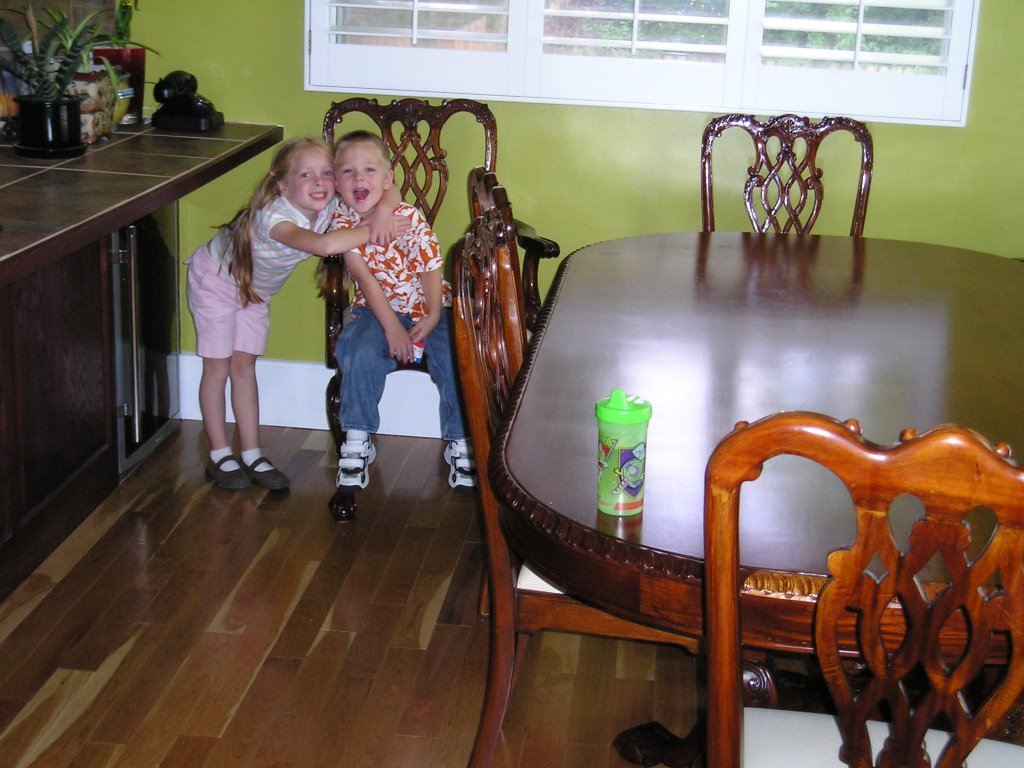
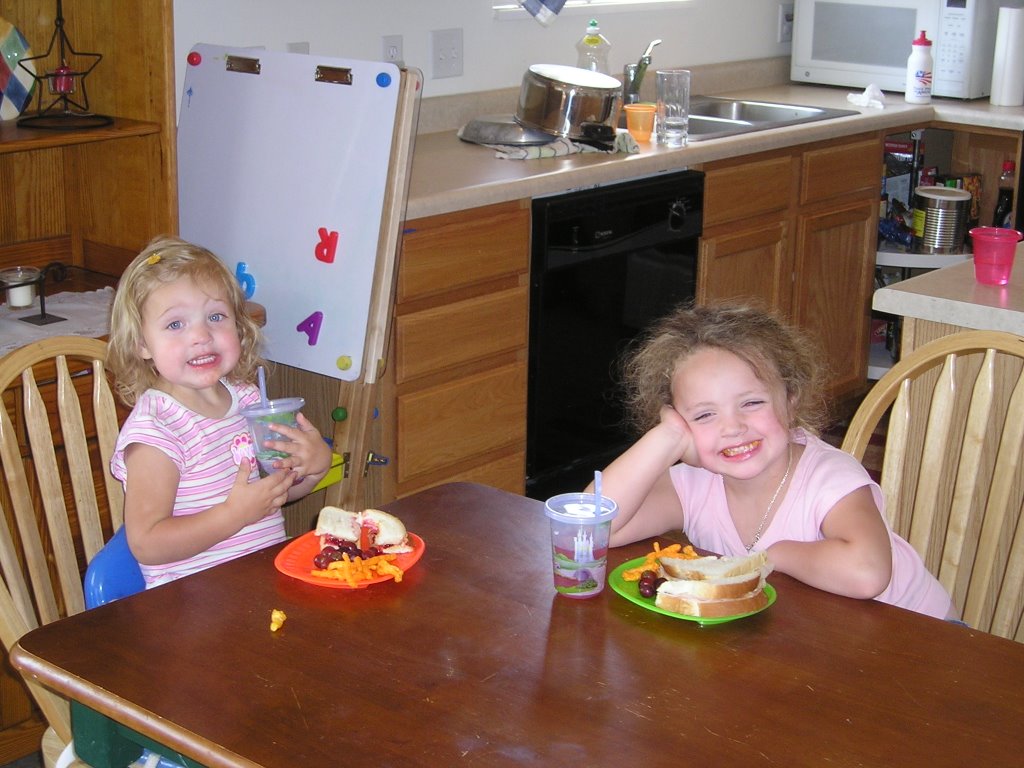
For those of us who are no longer in a classroom on a daily basis, there is a great reality check that comes when you are responsible for little children for a period of time. I recently babysat two of my granddaughters (ages 5 & 2 1/2) while their parents were out of town for a couple of days. I seemed to have forgotten that little children need constant interaction. I admit that I was worn out and was reminded that I am very glad I had my small children while I was much younger. Still, it was a delightful experience, one that I would gladly repeat at any time. We made cookies, went to a movie, walked to the bookstore, read stories and many other activities. Little children remind you about what is truly important in life. They remind me that life is about making someone else feel loved. Happy New Year!

Tuesday, December 19, 2006

Appropriate Practices


I went to a preschool holiday music program yesterday. It was wonderful. Not wonderful in the sense that it was high entertainment with children performing a professional program. It was wonderful because it was so appropriate for 3-5 year-olds. The children sang a few short songs, with actions, that the children enjoyed singing. There was no teacher yelling for the children to sing louder, no flashy memorized synchronized dance moves or sparkling outfits. The songs displayed children being children, singing about snowmen, doing the chicken dance and waving at grandma. I applaud that group of teachers for creating an activity that was appropriate and enjoyable for children. After all, it is not the product that helps children grow, it is the process.

Tuesday, December 12, 2006

Give Books This Season


The more I work with children the more I realize that one of the best gifts we can give a child is a book or books. Children's Literature is getting better all of the time. When we give a child a book it is a gift that can last a lifetime. It is critical that we help children link their thoughts to books. Having print awareness is a key predictor of reading success. So, if you are gathering gifts during this season, or throughout the year, consider a book. The gift will keep giving for a very long time. For a list of recommended books, click on the right side of this blog where it says, "Book List for 2005."

Tuesday, December 5, 2006

The Need for Nurturing

I took my son today to get his wisdom teeth taken out by an oral surgeon. We left the dental office with a list of instructions for the next 24 hours. Gauze packing, pain pills, ice packet, etc., are just a few of the things I was charged with for the day to help my 23 year-old get back on his feet. There is a large amount of nurturing and care-giving when someone is sick. I think that young children need that type of nurturing for regular development and growth. I am in the process of gathering developmental guidelines for infants and toddlers. It reads like the list of things I got from the surgeon today. Perhaps more emotional and cognitive than physical, but none the less very critical. We all need a list for early childhood to keep every child in check!

Tuesday, November 28, 2006

Social Emotional Skills


A critical piece of teaching children social and emotional behavior skills is to do just that-teach the skills. Many adults wait until a child misbehaves or "pushes their buttons" before reacting. The result is usually some type of discipline or punishment. Teaching does not occur in the heat of the moment, only emotional reactions. Therefore, children often repeat the behavior. Good teachers (and parents) teach their children appropriate behavior BEFORE inappropriate behavior occurs. When a child has background knowledge prior to the episode, the adult can say, "Remember when we talked about not hitting someone? What did we decide you should do instead?" This kind of a dialog instantly de-escalates the situation so that reasoning and understanding can take over, not emotional reactions. Previously setting up consequences also takes the emotion out of the moment. Both the child and adult already know the consequences (previously chosen with the input of the child) for the behavior.

Tuesday, November 21, 2006

Designing Supportive Environments


In my last entry I mentioned that the most critical piece of the social emotional aspect of early childhood is building positive relationships. The second most important piece is designing supportive environments. When negative behaviors are occurring, a teacher should analyze the basic set up of the classroom to see if the environment is encouraging negative behaviors (i.e., a large open space encouraging the children to run around instead of exploring at centers). I find that this is also true at home. I had all of my grandchildren at my house for an early Thanksgiving this weekend. We needed to plan a space where all the children could play comfortably so that disagreements would not occur. I was busy cooking, so I didn't do a very good job. When I took the time to look at the space, everything was better. Next time I will be more prepared. It is always important to remember our early childhood strategies because they work everywhere!

Tuesday, November 7, 2006

Building Positive Relationships


I was in Tennessee last week visiting with the wonderful preschool teachers in Murfreesboro School District. There is nothing in this world like an organized and high quality preschool setting. What a wonderful way for children to begin learning skills. I am reminded again about research indicating that nurturing teachers help children make more academic gains than drill sergeants. In fact, we know that building positive relationships is the most critical aspect of helping children build positive social and emotional skills. Check out the website for the Center for Social and Emotional Foundations in Early Learning (www.csefel.uiuc.edu) for more information about building social and emotional skills. What a joy to see loving preschool teachers. They should be everywhere!